
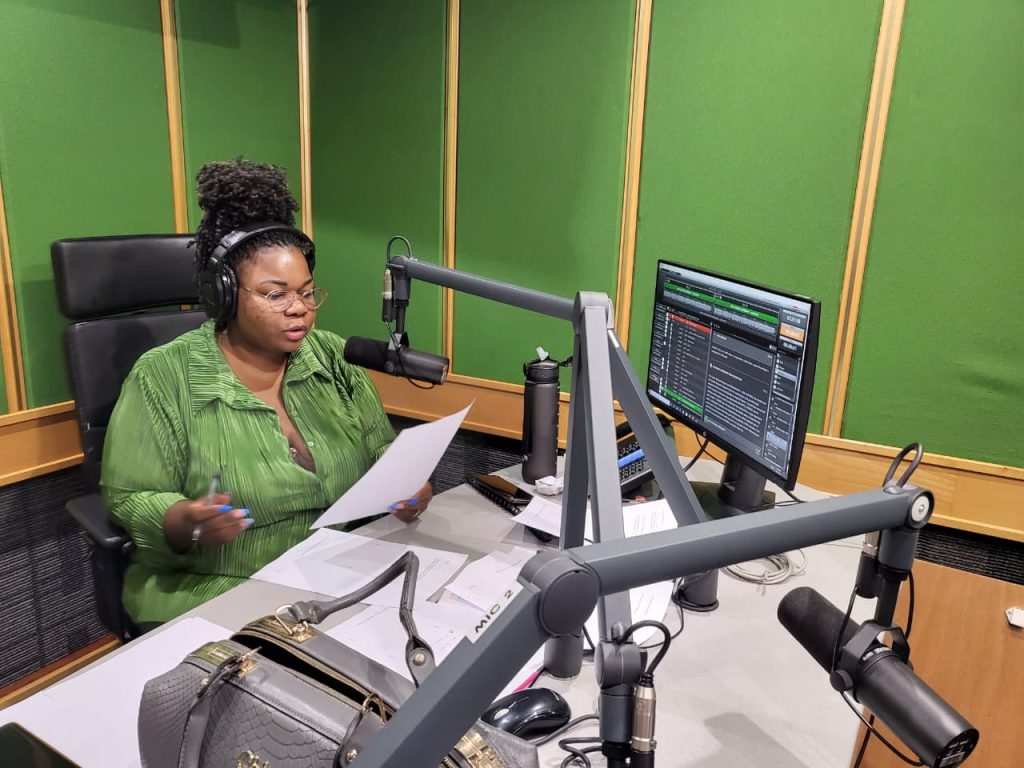
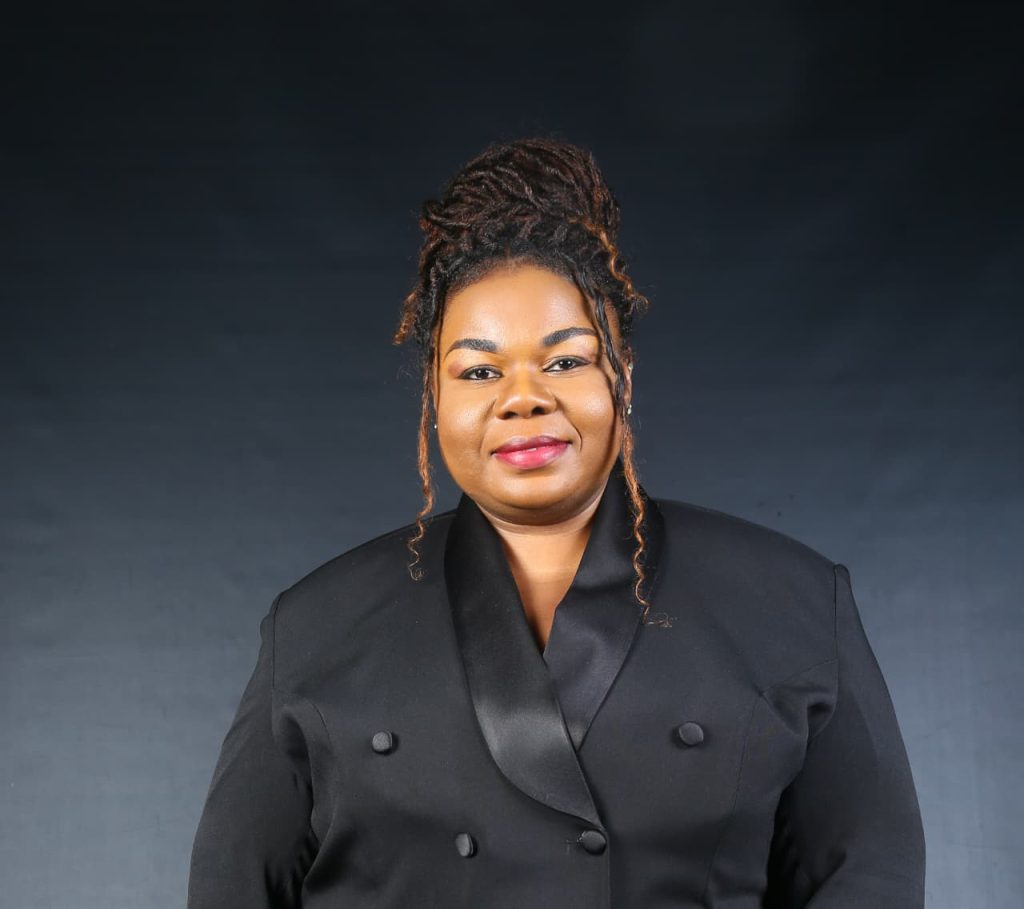
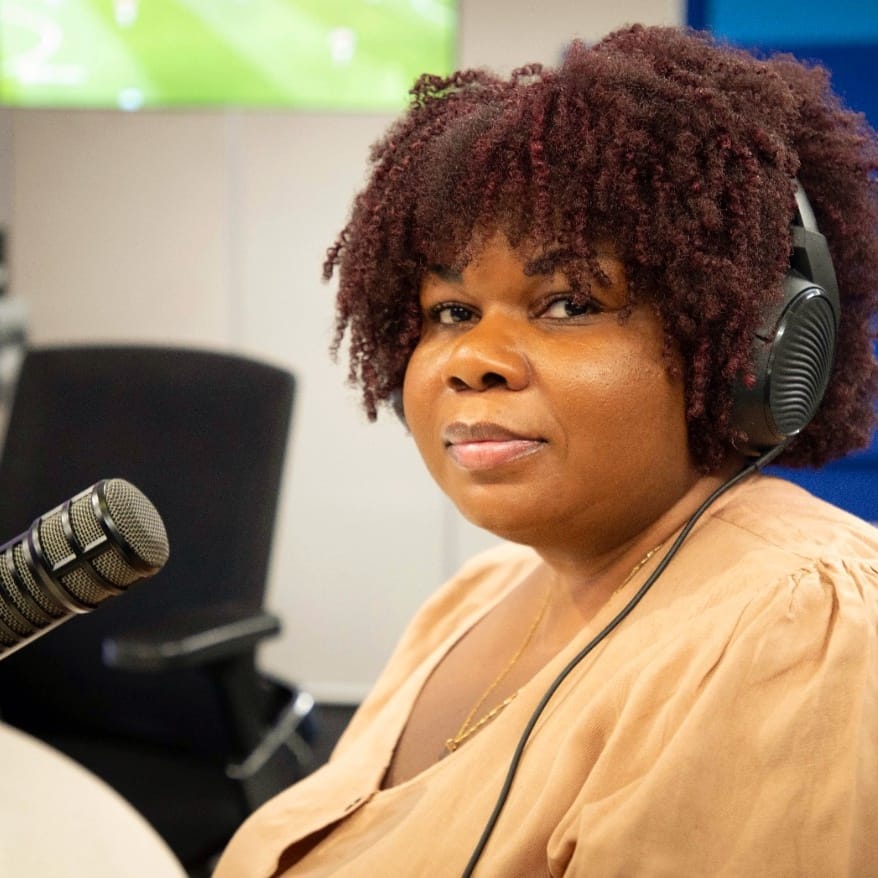
Journalism is often seen as a profession that either delivers truth from the source to the people or, at times, manipulates narratives to shape public perception. This Women’s Month, we celebrate journalist Aurelie Kalenga, who redefines journalism not merely as a vehicle to distribute information but as a powerful tool to amplify the voices of the people and share their lived realities.
Born in the Democratic Republic of Congo and raised in South Africa from the age of three, Aurelie recalls her childhood as ordinary and uncomplicated. She explain that children adapt easily to languages and environments. and for her, growing up in South Africa felt natural. She attended Linksfield Primary, later Sandringham High, and ultimately pursued studies at Rhodes University in Gram’s town. Unlike many foreigners who often feel like outsiders, Aurelie never viewed herself as displaced. She regarded school a an opportunity to learn and grow, unaffected by notions of difference, perhaps, she reflects, because the social environment of that time was distinct from today.
For most of us, our career choice is often shaped by our environment and experiences. But for Aurelie, there was nothing in her surroundings that made her choose journalism. At Rhodes University, she initially enrolled for a Bachelor of Arts in Journalism and Law. Her thoughts when it came to her career choice was how much freedom she would get in Law and flexibility in terms of creativity. Ultimately, she chose journalism, recognising that it offered constant variety – each day bringing new stories and new people. Her decision, she explains, was not about salary statistics but about finding a new path aligned with her desire to connect with others.
Journalism as Truth-telling
Every profession comes with it’s challenges, and journalism is no exception. Aurelie notes: “Journalism is a tough field. When you try to expose the truth, those invested in concealing it often attack journalist. from apartheid to colonialism and even now, oppressive regimes fear non-manipulative reporting.”
As a women, the challenges double. She reflects on how social expectations still limit or confine women to domestic roles, forcing them to work harder in professional spaces to earn equal recognition. “The playing field is never level,” she remarks, “so women must excel to prove they are just as capable as men.”
She highlighted the importance of balance in news reporting: “Radio journalism has what we call ‘light and shade’. While it is important to cover difficult truths- wars, disasters, injustice- as journalist we also need uplifting stories to motivate people. But good news can not be fabricated; it must be genuine. The responsibility of a journalist is to deliver both the good and the bad, unfiltered, because reality cannot be sugar-coated.”
In terms of journalism and social media, she states that there is a thin line between fake and real news as everything is put out there. As a journalism, she spoke of how she can incorporate the usage of social media to get the news from the people directly. “The line between fake and real news has blurred. Social media is immediate, and as a journalist who needs to deliver unfiltered news, social media holds me accountable. Our job as journalists is not to dominate the conversation but to create a platform where people can tell their own stories. We ask the questions the public wants answered, not to make it about ourselves.”
A Career at SABC and Breaking Barriers
Reflecting on her early career at SABC, Aurelie explains that she never went into that space with the mindset of being a foreigner. “Too many Congolese people carry the mentality of ‘I am a foreigner, will I get accepted?’ That kind of thinking holds most people back and they never fully explore the opportunity given to them. If you studied and are qualified, you deserve to be in the room as much as everyone else. Go into the room and take up space.”
Instead of perceiving her Congolese roots as a limitation, she embraced them as an asset. She took every opportunity as deserving. During the 2011 xenophobic attack, her nationality did not hinder from reporting the news and getting the story to the listeners in a truthful manner. An asset she has a Congolese is that she can speak speak French, this alone allows her to cover news in a different language or travel to French speaking countries to cover news. “Never despise small beginnings. Use every advantage you have, work hard, arrive earlier than others to work even as an intern, and excellence will open doors.”
At SABC, her internship initially ran for 12 months but she got an extension with other interns. During that period of being there for an extra 4 months, she worked hard, networked and eventually got a permanent contract with the SABC in radio news for about 3-4 years. After her 4 years had ended, she explored the option of working for a private broadcaster and applied at 702 Eyewitness News where she worked for 8 years. She did not confine herself to one niche, he explored various roles- newsreader, reporter, and a deputy news editor. Today, she continues her journey at Primedia in Cape Town, demonstrating flexibility.
In hindsight, when speaking about her first radio show, she thought she did good. Her first ever done show was at University, where she was part of the Rhodes University radio show. That experience of being on campus radio had her think she was ready and she carried that confidence with her. Her most nerve-wracking assignment, she recalls, was breaking the news of Nelson Mandela’s death on SAfm. “I was nervous knowing the whole nation would hear it from me first. But I saw it as an opportunity to cement myself in the industry. Youth gave me confidence, and I hope we never lose that courage.”
Beyond Journalism: Climate Justice and Community Work
The climate reality project is a climate justice organisation founded by the former President of the United States of America, Al Gore and it expanded her career path. Starting as Communications Manager and now serving as Director, she stresses that climate change is not merely a scientific issue but a human one.
“Climate affects everyone. When there is no rain, food prices rise, and that impacts what we eat daily. News must be told with dignity, not at the expense of people’s humanity and dignity.”
Aside from journalism, Aurelie started Grace Beyond boarders, a foundation she founded in 2020 during the Covide-19 pandemic to provide relief for migrants and vulnerable communities in South Africa. . It is not limited to Congolese people only but foreigners in South Africa. “I founded this organisation to be a relief aid for foreign individuals,” she states, “It is called Grace Beyond Boarders because Grace is unmerited, that is why is it for all foreigners, not only Congolese.” The organisation aided the women at the Yeoville market when the it burned down 2 years ago and assisted with basic needs and some capital they needed to start their business again. Since then, the organisation has expanded, reaching communities as far as Pretoria, Rosettenville, Vaal, Cape Town, and beyond. What surprised Aurelie most was that their largest donors were South Africans, illustrating the power of solidarity and social cohesion.
The Value of Mentorship and Her Message to Congolese Youth
Aurelie is passionate about mentorship, describing it as “a free ticket into someone’s mind.” At SABC, her mentor pushed her to think beyond being “just an intern” and work as a journalist from day one. She encourages young people to seek mentors not only in their field but also individuals they admire for their discipline, problem-solving, and leadership. “Surround yourself with like-minded people. Even is they are in a different profession, they can still give you a seat at their table.”
To the Congolese community, her message is clear: “Stop seeing being Congolese as a disadvantage. It has never held me back. Take up space, step forward, and remember- the worst response you can get is a no.”