“Above all, be the heroine of your life, not the victim.” – Nora Ephron
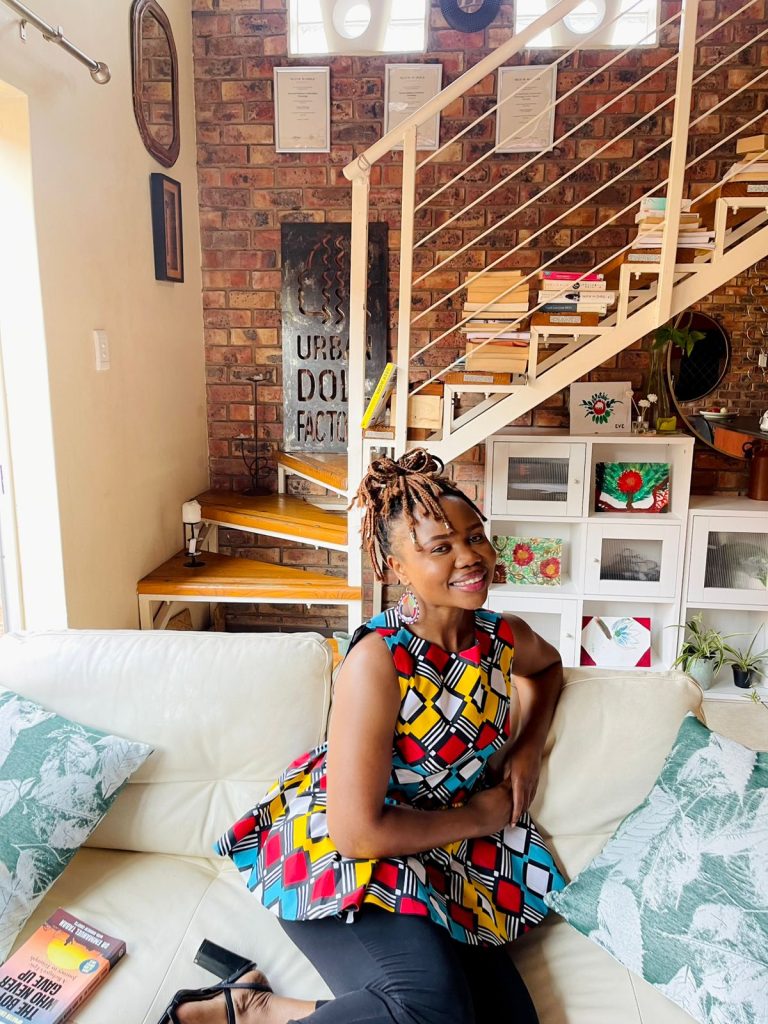
If resilience, endurance, and perseverance were personified, they would look like Popina Khumanda. This Women’s Day, we celebrate a Congolese women whose story is not only about survival and triumph but endurance, determination, and a hope for tomorrow. Having lived through and endured the horrors of war, captivity, and loss, Popina emerged stronger, determined to build a life for herself instead of living a life shaped and restricted by pain and her past. Her journey reminds us that a person is more than their physical trauma-they are also their courage, potential, and vision.
Background
Popina Khumanda was born and raised in the Democratic Republic of Congo-DRC. At the age of five, her village came under attack, and she was captured by rebels along with her sister. They remained in captivity for five years before she managed to escape and begin a long search for safety, eventually making her way to South Africa. Her journey, a walk of over 6 000 Km to South Africa, portriad her resilience and endurance. was far from easy- especially for a young girl who had endured so much. After witnessing her sister’s death and walking over 6000 km on foot, she remains deeply grateful that she made it out alive.
Adapting to a New life In South Africa
Popina’s journey to South Africa was not an easy one, especially after what she had experienced at the rebel camp. Alone, traumatised, and unfamiliar with the language or culture, she had to rebuild her life from the ground up. In the interview, she describes how her transition to South Africa was not easy and how being forcefully removed from everything familiar left her disorientated. For her, life began and ended in the DRC- so adapting to an entirely new environment with different cultural norms felt very unfamiliar. Coming to South Africa, she had to learn and adapt to the way of life here- the culture, language, how things operated and even the lifestyle. Her take on how to adapt in a foreign land is to learn the language because for Popina, language is not limited to simply being able to communicate with others but also to learn, understand, and connect with their culture, values, and way of life.
“A language represents culture. Culture represents people and people represent connectivity,” she stated. She taught herself several South African languages, including Xhosa, Zulu, and Afrikaans. Popina believes that integration and education are the key tools for survival and growth in a foreign land. Her transformative mindset allowed her to adapt and eventually thrive.
Education and Empowerment through Cybersecurity
Popina’s story did not end with survival; she pursued education with a single goal in mind: to make a better life for herself because she believed that she was given a second chance at life, and education was a step towards fulfilling the goal. “Dreams do come true, and I came to this country with nothing but dreams, hope, and determination,” she said. Initially, her dream was to study Electrical Engineering but she was advised to explore Information Technology instead. She completed her undergraduate studies at the University of Nelson Mandela and went on to major in cybersecurity at the University of Cape Town.
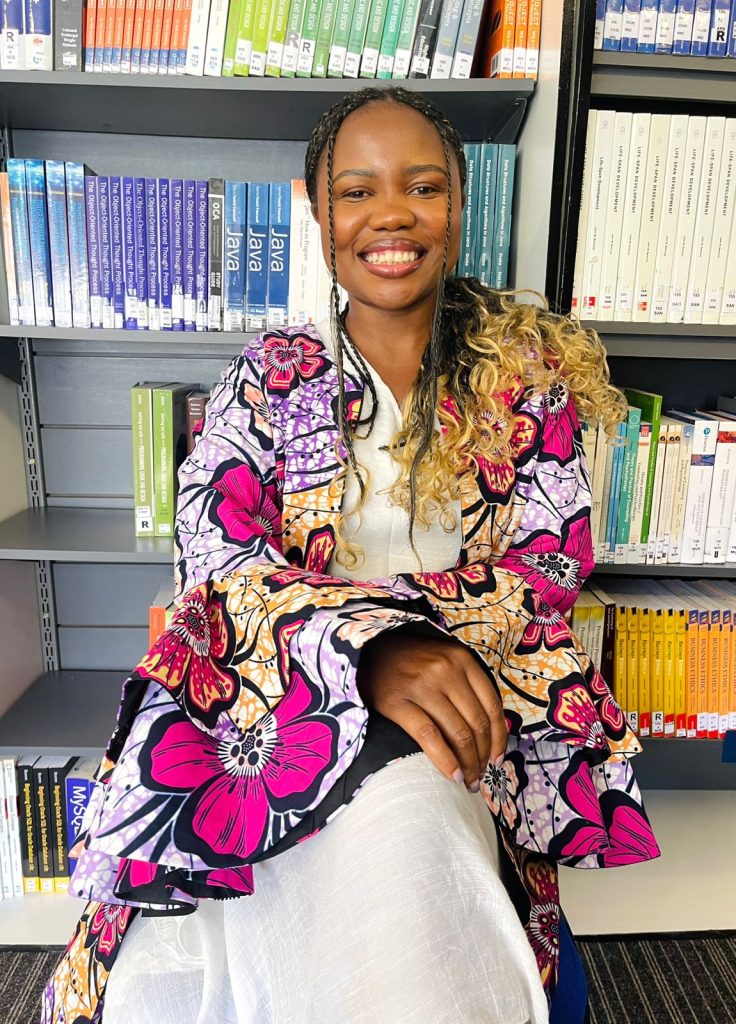
Now a lecturer and researcher in cybersecurity, Popina is committed to building skills development and sharing knowledge in the academic world. She teaches the next generation not just about cybersecurity tools, but also about applying their knowledge to real-life problems. Her goal is to encourage students to think globally, adapt their knowledge to solve real-world challenges, and make a lasting impact in their field.
Authoring Her Story: The Smallest Ones
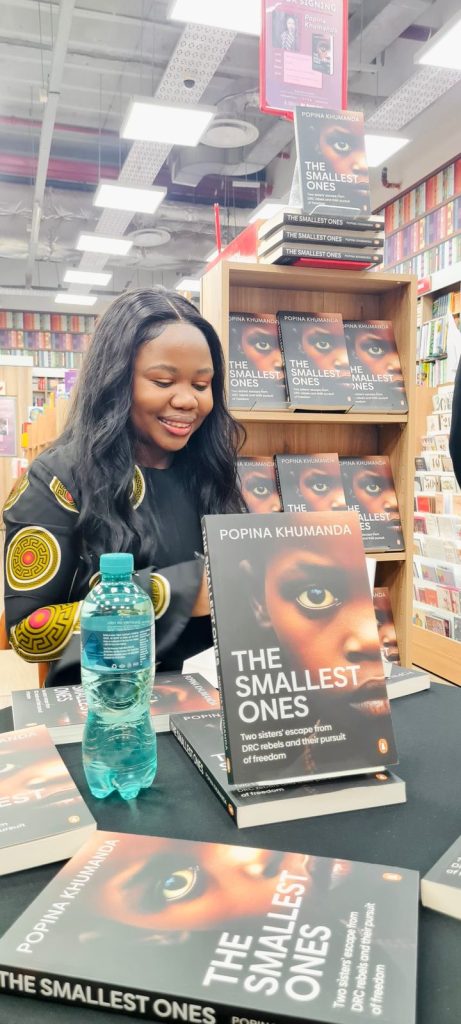
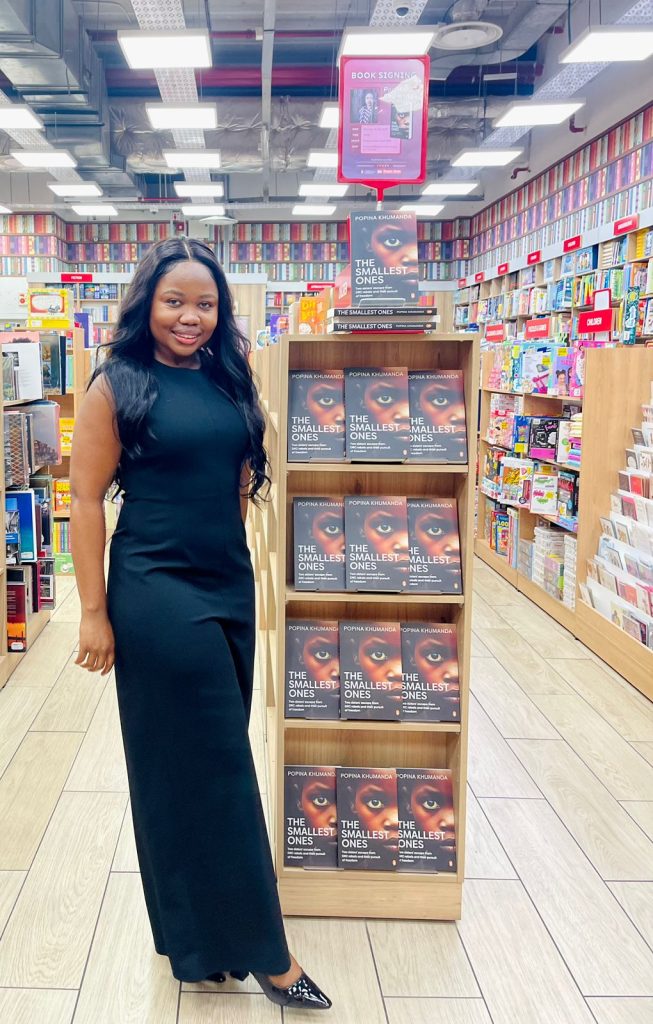
Popina did not only want to impact the cybersecurity world but the entire world in every possible way imaginable. Beyond the classroom and research, Popina sought to share her story with the world. Her memoir, The Smallest Ones, was published in June 2025 by Penguin Publishers. Though her first manuscript submission was rejected, she did not give up. The book highlights her journey from captivity to freedom, not just for herself but for those whose stories were never told. Far too often, when someone has experienced and endured such a traumatic experience, they want to put it all behind them and forget about it but for Popina, she wanted her story and the story of those she was with to be heard.
“When we escaped, I left a lot of people behind,” she shares. “Many died, including my best friend. and when we left, I knew that I carried the burden to ensure that their voices were heard.” She took it upon herself to not hide her story but bring awareness about the events that unfolded during the war.
The book’s title, The Smallest Ones, was deliberately chosen to highlight the often-overlooked strength of women and children and those deemed as “less” by society. In many societies, the most vulnerable are ignored, yet they carry immense hope and resilience. Her goal was to honour that strength and inspire others to acknowledge and support those deemed “small”.
Writing the book came with it’s own emotional and societal challenges. In many African cultures, survivors of sexual abuse are stigmatised and considered of lesser value. They are often marginalized, judged, and abandoned. However, she chose to rise above societal perception, determined that her story- and the stories of others- would not be buried in silence.
She saw her vulnerability as power, believing that speaking up would help end generational cycles of violence and discrimination. Her willingness to share her story world wide reflects her unshakeable courage. For her, truth-telling was not about reliving the trauma, but about reclaiming dignity and inspiring change.
Faith, Community, and a Mentality of Greatness
Throughout her journey, Popina attributes her strength to God. For her, God has always been her life partner, guiding and leading her from the moment she was abducted to her journey in South Africa. Her unshakable faith carried her through unimaginable trails. In addition to God been her lasting foundation and support, she acknowledged the vital role played by social workers, teachers, and her late sister in shaping who she is today.
She never saw her journey as a solo achievement. Instead, she celebrated the community that surrounded and uplifted her. Her motivation was rooted in a deep-seated belief that she was made for greatness. Even through hard times, she constantly sought creative ways to overcome obstacles and stay on course.
Giving back: A Vision for the Future
Popina’s long-term goal is to return to the DRC- not to relive the past but to change the future. She plans to build schools and use her expertise to uplift her home country. Her education, she insists, was never just for herself but for people. “I want to put Congo on the map,” she say, with passion and clarity.
When asked if she would share any advice with her younger self, her response was deeply reflective. “I would not tell her anything. I would probably just pass by her and watch,” she said. For Popina, there is something sacred about the unknown. She believes that foreknowledge would have interfered with her natural growth. “Leaving a note to self would strip away at the person I am meant to be and the things I am meant to learn from,” she stated. Her perspective honours the process of becoming-the beautiful unfolding that hardship often brings.
Popina’s message to women who have experienced trauma is one of acceptance, restoration, and self-love. “Accept that it happened,” she says. “But know that it does not make you less. Life just happened to you.” She encourages women to see themselves as whole, regardless of what was taken from them.
In a world that often judges and isolates survivors, Popina offers an empowering alternative: embrace your womanhood, your pain, your healing, and your strength. The right people will see you, value you, and love you for exactly who you are.
As Nora Ephron says, “Above all, be the heroine of your life, not the victim,” Popina embodied that and allowed her mind to be transformed so that she can be the women she is today; she did not run away from her pain. She was the victim in her past but she did not stay the victim in her future. She chose to live for her tomorrow and through hope, faith, and having a supportive community, she re-shaped her life and made a future for herself.