


To mark Africa Day, the University Of Johannesburg Congolese society (UJCS) hosted an Africa Day event themed: Education, a driving force for Africa’s development. Africa Day honours the founding of the African Union and celebrates the continent’s unity, progress and culture. This years theme focused on education as key factor for African’s growth and how the knowledge we get can transform the African continent.
Students from various countries attended along with speakers who shared valuable insights and meaningful knowledge with everyone present. The speakers we had where Lordy-Gabriel Molisho, Dr. Malusi Mcube, Mr Christian Kayembe, and Dr. Eric Bakama. Each speaker understood the reason why education was important and through their own experiences, they could boldly speak and inspire others with their journey. Our first speaker, Dr Malusi Mncube, a PhD holder in Political Studies and an expert in international relations and geopolitical strategy, opened the event with a powerful message on the value of education. Dr Malusi’s deep passion for education was evident – not only in his words, but also in how he acknowledged those who came before us and made it possible for us to access both education and freedom. He paid tribute to figures like Patrice Lumumba, Julius Nyerere, and Steve Biko, among many others who fought for liberation and gave the opportunity to study.
One of the most significant points Dr Mncube raised was that education extends beyond written material. He emphasized the need for us to shape education with our own character and lived experiences. In his view, learning does not take place solely in the classroom. Instead, each of us holds unique knowledge within that can form the foundation for awakening the brilliance that lies inside. For Dr Mncube, education is not only about learning, but about networking, sharing information, and growing through the perspectives of others. He believes that we can all make an impact and we all carry a foundation of insight capable of awakening true brilliance. In his closing message, Dr Mncube reminds us that we are living in a century of transformation. Everyone has a role to play, and as we move forward, we must ensure that we leave no one behind – including ourselves.

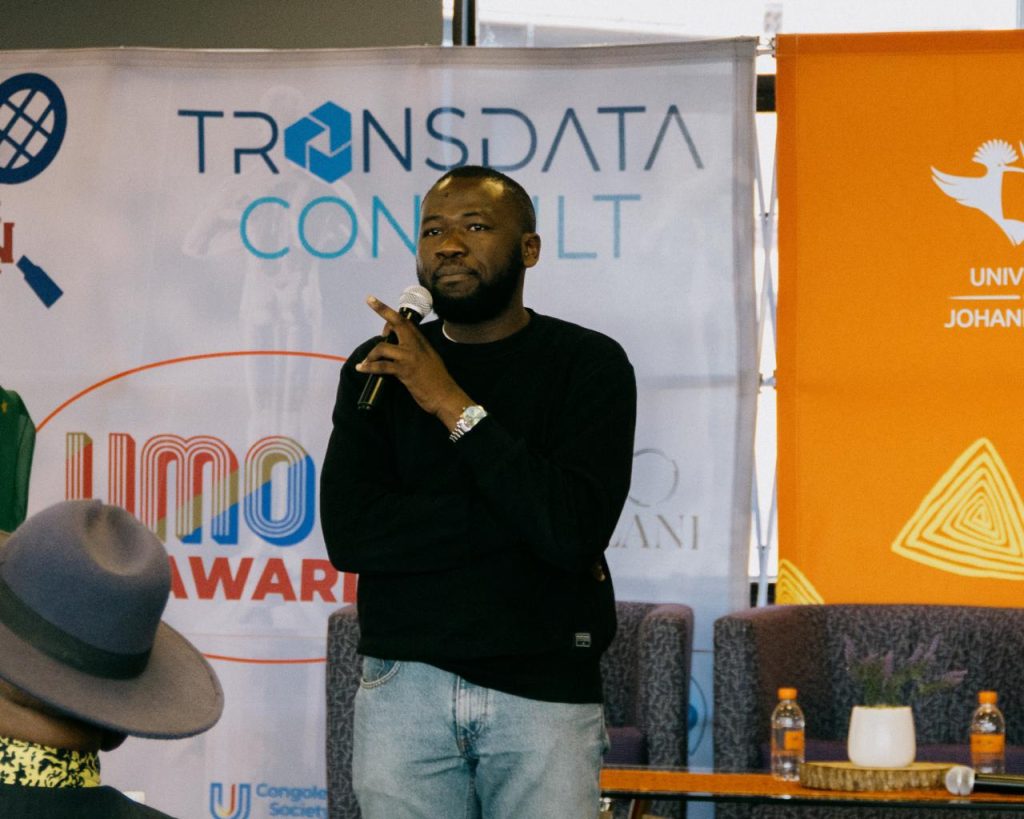
The second speaker, Lordy Gabriel Molisho, is a lecturer at the University of Johannesburg, a Biotechnology postgraduate student, vice chairperson of the Biotechnology and Food Technology Society, and a farmer. He shared an inspiring message on excellence and purpose-driven education emphasising that education begins at home and within our communities, reminding us of the African proverb; “A child is raised by the community.”
He challenged the narrow view of excellence as a mere genius, stating that true excellence lies in applying knowledge with discipline, consistency, and intention. His journey to success was built on a commitment to doing his best in every role – not being the smartest in the room, but the most consistent. Lordy also acknowledged the struggles students face and encouraged us to reflect on the root causes of demotivation. His key advice: be present, seek understanding, and connect learning to real-world impact. Education, he concluded, should always serve a practical purpose.
Another speaker who left us all thinking about the next decision and how we go about our qualifications was Dr Christian Kayembe. He is a PhD candidate in public management and he is also a lecturer for 1st and 2nd year students. Dr Kayembe is not only a lecturer but an award winning education advocate and social entrepreneur. His dedication and passion for education trails back to when he founded the classroom buddies to help other students. He built on the previous speaker’s importance of communication and it’s role in community development by challenging the audience to ask deeper, often overlooked questions about their personal life and academic journey. He urged listeners to reflect on key questions: What is the purpose of your education? What problems are you solving through your qualification? What solutions can it bring to the world? These questions, he explained, help us define a clear path and remain focused on meaningful goals.
Dr Kayembe emphasised that education should be more than a credential – it should be a motivating factor for positive change in our communities. He encouraged us to step outside our comfort zones, think critically, and stay curious, always asking “why?” to deepen our understanding. Building on what Lordy said, he stressed that learning is not just about gaining knowledge, but applying it meaningfully. True education, he noted, is a life long process of building, questioning, and adapting.


The Africa Day celebration was more than just a tribute to celebrate Africa and it’s freedom – it was a space where knowledge, experience, understanding, and strategies where shared by the speakers and an engaged audience. As Dr Mncube said, we – the new generation – are Africa’s future, and real change begins with us. To make a meaningful impact, we must combine our qualification with both soft and hard skills – blending in communication, adaptability, and the constant drive to grow in knowledge and understanding. To conclude on what all the speakers said: Education should serve a greater purpose beyond the individual.

